架构
AgenticX 系统架构概览。
架构
概述
AgenticX 是一套能力核心,上面叠三种产品形态:
- Core / Runtime:Python SDK、Studio Server 与 Agent Runtime
- Near Desktop:本地优先工作区,默认走本机
agx serve - Enterprise:Portal、Admin Console 与 Go AI 网关,面向受管控的 Web 访问
Near 与 Enterprise 共用抽象,当前部署路径彼此独立。网关是合规与模型中继,不是完整的 Agent Runtime。
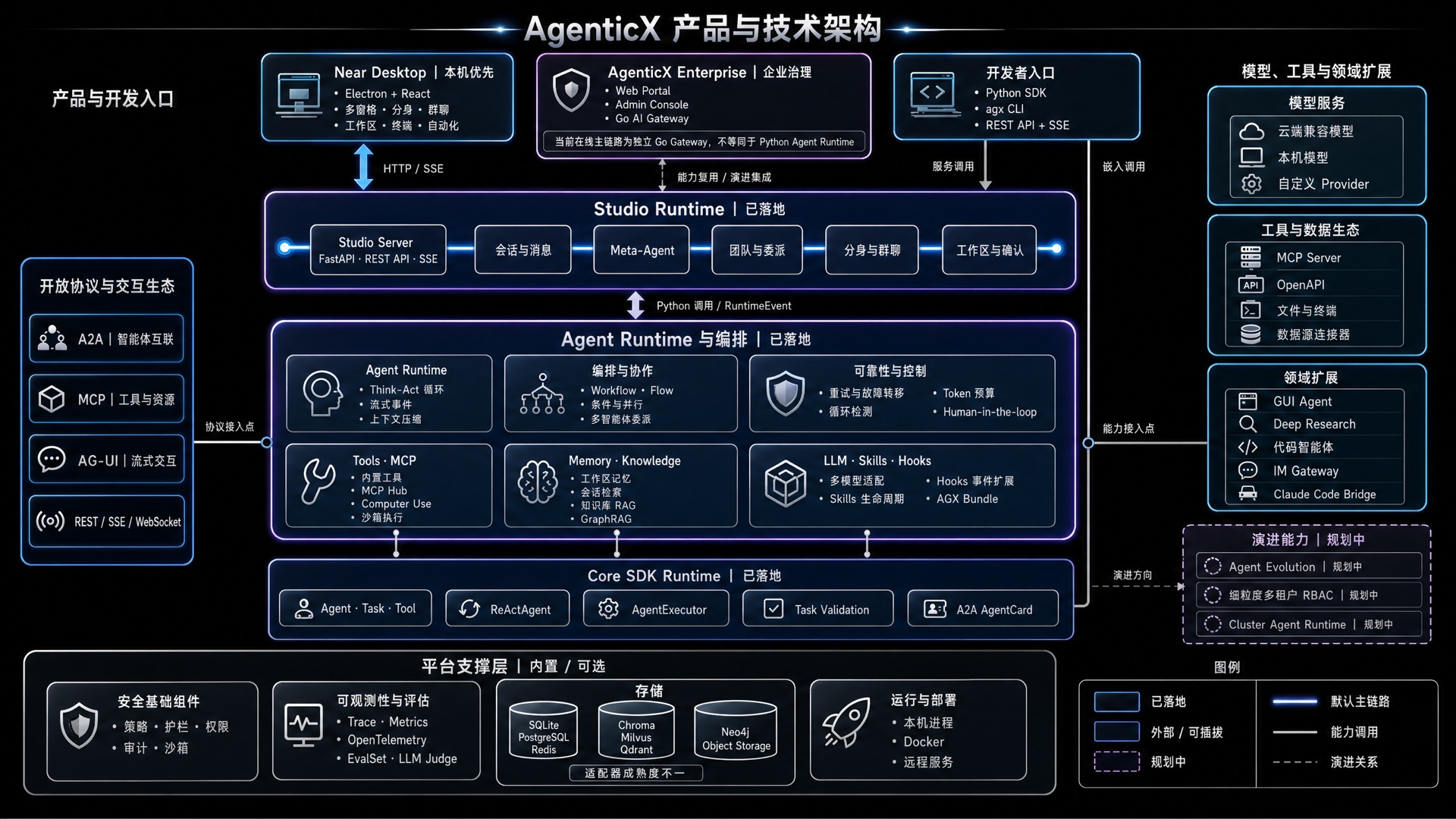
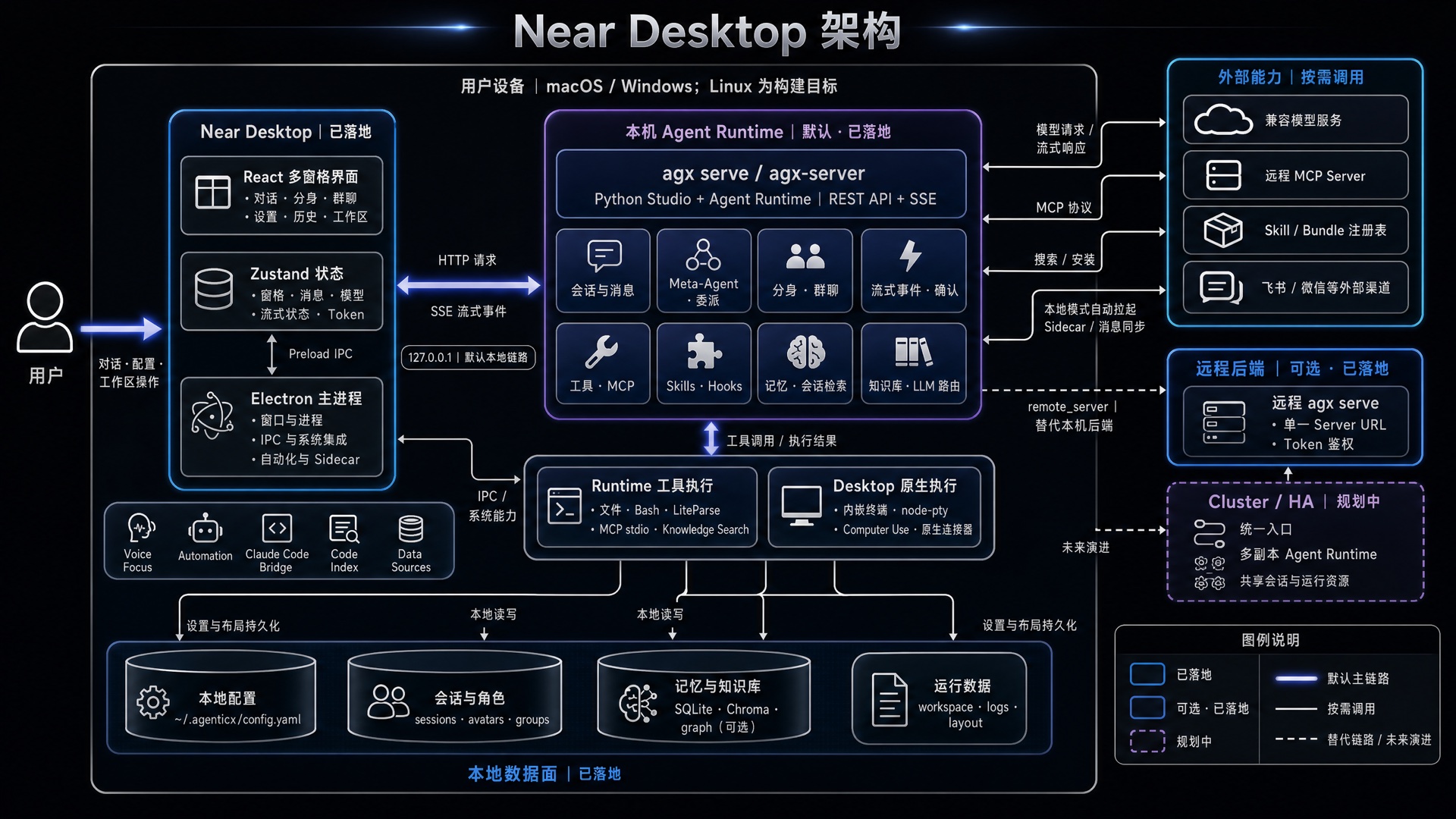
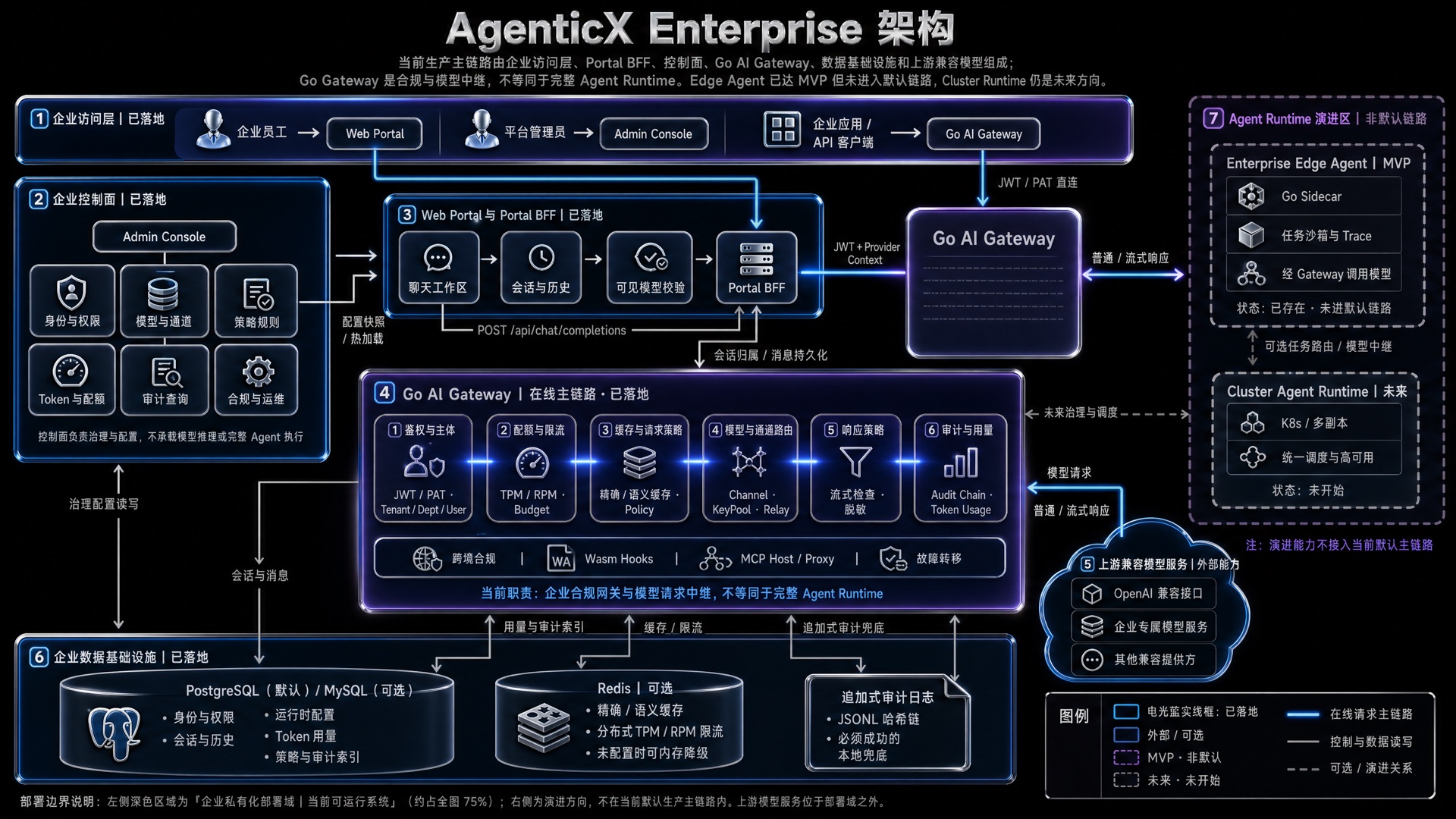
Runtime 内部仍可按五层来读,从用户界面到平台服务。
实践案例:同一句话,三扇门
场景。 「总结这个仓库的 README。」
| 入口 | 你实际启动的 | 循环跑在哪 |
|---|---|---|
| SDK | AgentExecutor(llm_provider=...).run(agent=, task=) | 你的 Python 进程 |
| Near | 应用 → 本机 agx serve → AgentRuntime.run_turn | 127.0.0.1 上的 Studio |
| Enterprise | Portal → Go 网关 → 上游模型 | 网关策略 / 配额;不是 AgentRuntime |
你会看到。 Near:聊天窗格、工具卡、~/.agenticx/sessions/<id>/messages.json。Enterprise:浏览器工作区;命中规则时有审计 / 策略提示。不要指望网关后面还有 Desktop 窗格。
上面三张正式架构图是产品总图,需要一眼看完整栈时用它们。
第 1 层:用户界面
Near Desktop
Electron + React + Zustand + Vite。多窗格聊天、分身、群聊、工作区、终端、自动化与语音焦点。详见 Near 桌面。
CLI(`agx`)
功能完整的命令行工具,涵盖:serve、studio、loop、run、project、deploy、codegen、docs、skills、hooks、debug、scaffold、配置管理等。
请参阅 CLI 参考 →
SDK
用于将 AgenticX 嵌入自有应用的 Python SDK。
第 2 层:Studio 运行时
Session Manager
管理用户会话、聊天历史持久化(messages.json)、写锁与内存状态,并支持跨会话查询分身状态。
Meta-Agent
CEO 调度器。动态编排子智能体、维护活跃智能体快照,并在每轮对话中注入记忆召回。由 agenticx/runtime/prompts/meta_agent.py 构建。
Team Manager(`AgentTeamManager`)
控制并发智能体执行、归档快照(_archived_agents)、owner_session_id 会话隔离、avatar_id 绑定以及全局注册表查询。
分身与群聊
- Avatar Registry:持久化智能体身份的 CRUD 操作
- Group Chat:多种路由策略 — 用户定向(
@mention)、Meta 路由、轮询 - Group Router:处理
@mention解析(全名 / slug ID),智能路由至指定成员
第 3 层:核心框架
智能体执行引擎
基于 12-Factor Agents 方法论。think-act 循环处理工具调用、应对上下文溢出并执行自修复;工具调用序列经校验,避免 provider 400 错误。
编排引擎
基于图的工作流,支持条件路由与并行执行;Flow 体系提供装饰器式流水线定义。
工具系统
- 函数装饰器(
@tool) - MCP Hub(多服务器聚合)
- Remote Tools v2
- OpenAPI toolset
- 沙箱工具
- Skill bundles
记忆系统
分层结构:core → episodic → semantic。与 Mem0 集成以实现长期持久化,支持记忆衰减、混合搜索以及压缩/刷写。
LLM 供应商
统一 provider 接口,覆盖 15+ LLM,具备响应缓存、故障转移路由与 transcript 清洗能力。
第 4 层:平台服务
可观测性
回调体系、实时指标、Prometheus/OpenTelemetry 集成、轨迹分析、span 树、WebSocket 流式输出。
协议
- A2A:智能体间通信(client / server / AgentCard / skill-as-tool)
- MCP:Model Context Protocol,用于工具与资源访问
安全
泄漏检测、注入检测器、策略引擎、审计日志、沙箱(Docker / Microsandbox / Subprocess)。Studio 路径由 hooks、权限与路径保护组合而成,尚未把每次操作都送进完整的 SafetyLayer。
存储
- KV:SQLite、Redis、PostgreSQL、MongoDB、InMemory
- Vector:Milvus、Qdrant、Chroma、Faiss、PgVector、Pinecone、Weaviate
- Graph:Neo4j、Nebula
- Object:S3、GCS、Azure
Studio 默认持久化是 ~/.agenticx 文件树加 SQLite。部分第三方适配器仍是占位,未接到 Studio 主路径。
第 5 层:领域扩展
GUI Agent
桌面自动化框架,采用启发式与 VLM 反思模式进行 A/B/C 结果分类。
知识与 GraphRAG
文档处理流水线 → chunkers / readers / extractors → 图构建(GraphRAG)→ 检索器(vector / BM25 / graph / hybrid)→ reranker。
AgentKit 集成
面向外部智能体框架的可插拔集成层。